Overview
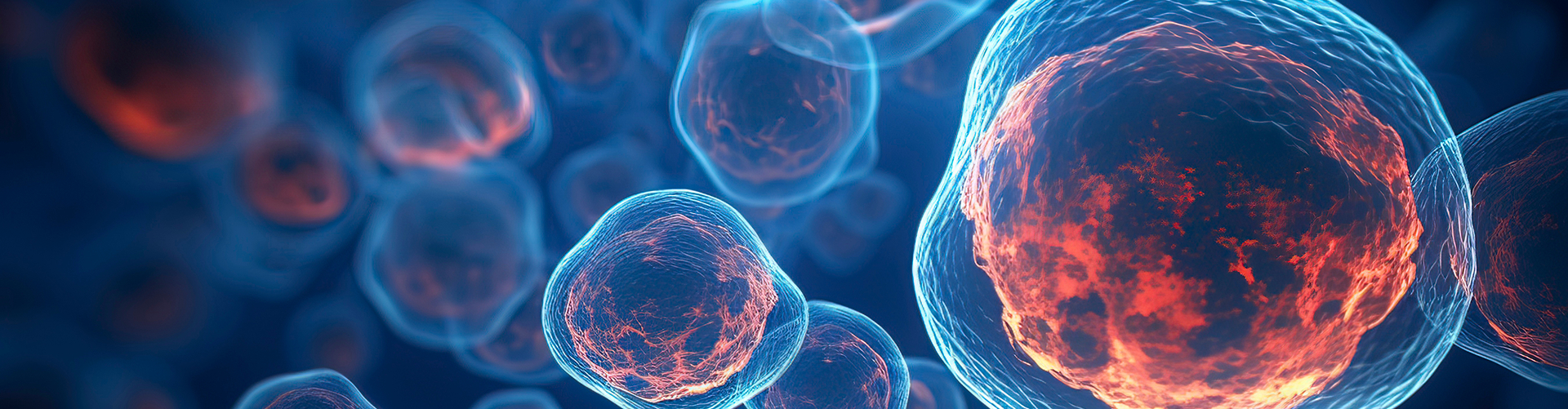
NHP leverages recent advances in the structural, molecular, and cellular biology of ATP-driven rotary nano-motors and small GTPases to target these essential energy-production and signaling pathways and to design and develop new drugs to combat the world’s most deadly infectious and neurodegenerative diseases.
Last Universal Common Ancestor (LUCA) and evolution of three types of proton-translocating rotary nano-motors:
These rotary nano-motors show deep structural and functional conservation, tracing back to a common ancestral design created by Nature around four billion years ago, which operated in the Last Universal Common Ancestor (LUCA). As the universal machinery for energy transduction, these enzymes are crucial to all cellular life. The recent determination of their atomic-resolution structures, enabled by advances in Cryo-EM, offers a clear blueprint for developing next-generation therapeutics that can specifically target these vital rotary nano-motors in bacterial and human cells.
Rotary nano-motors of three distinct domains:
Bacteria, Eukarya and Archaea

Domain Bacteria:
F-ATP synthase mitochondria/bacteria
Domain Eukarya:
V-ATPase eukaryotes/humans
Domain Archaea:
A-ATPase/synthase archaea
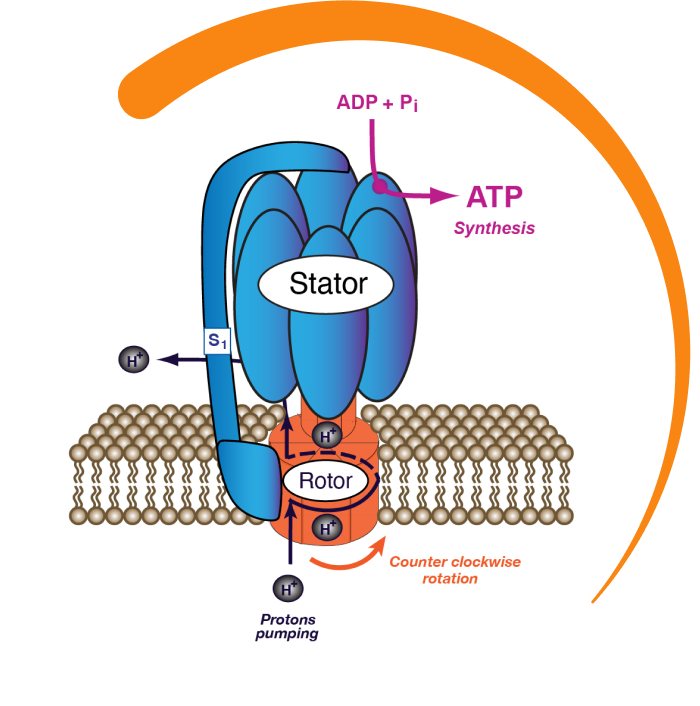
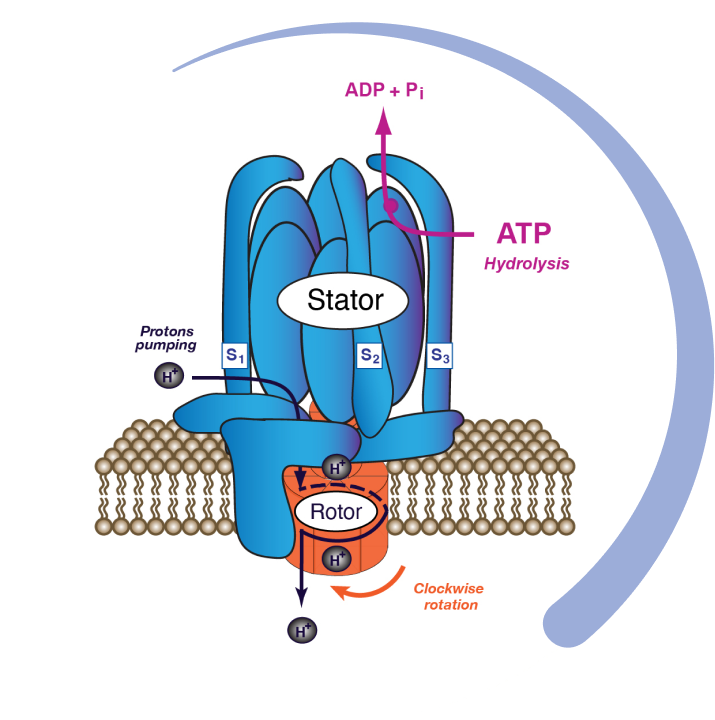
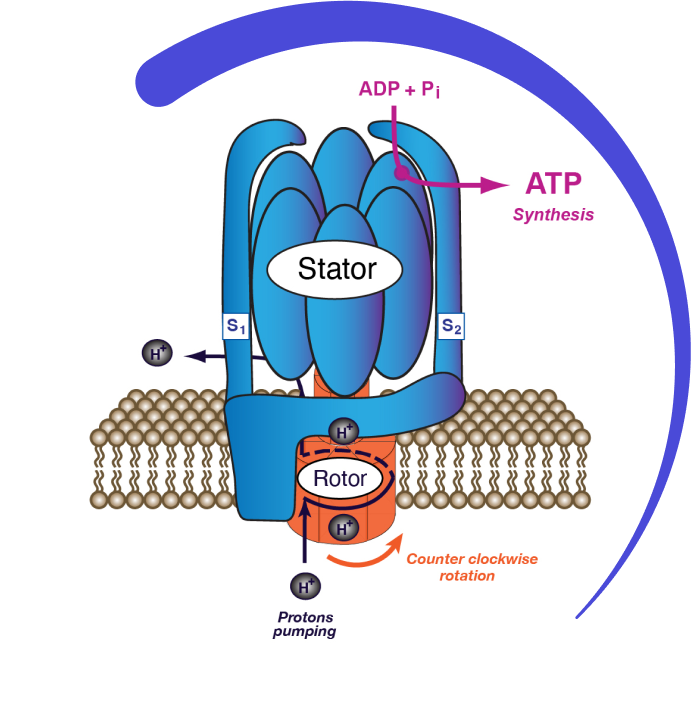
Cellular F-ATP synthase rotary nano-motor from Mycobacteria smegmatis
Facts and Function
| Inventor | Nature |
|---|---|
| Time of Invention | ~ 4 billion years ago |
| Size of Rotor | Diameter ~10 nanometers (nm) |
| Speed of Rotation | ~ 10,000 RPM |
| Energy Transformation | The flow of protons (H+) is driving rotation and ATP synthesis |
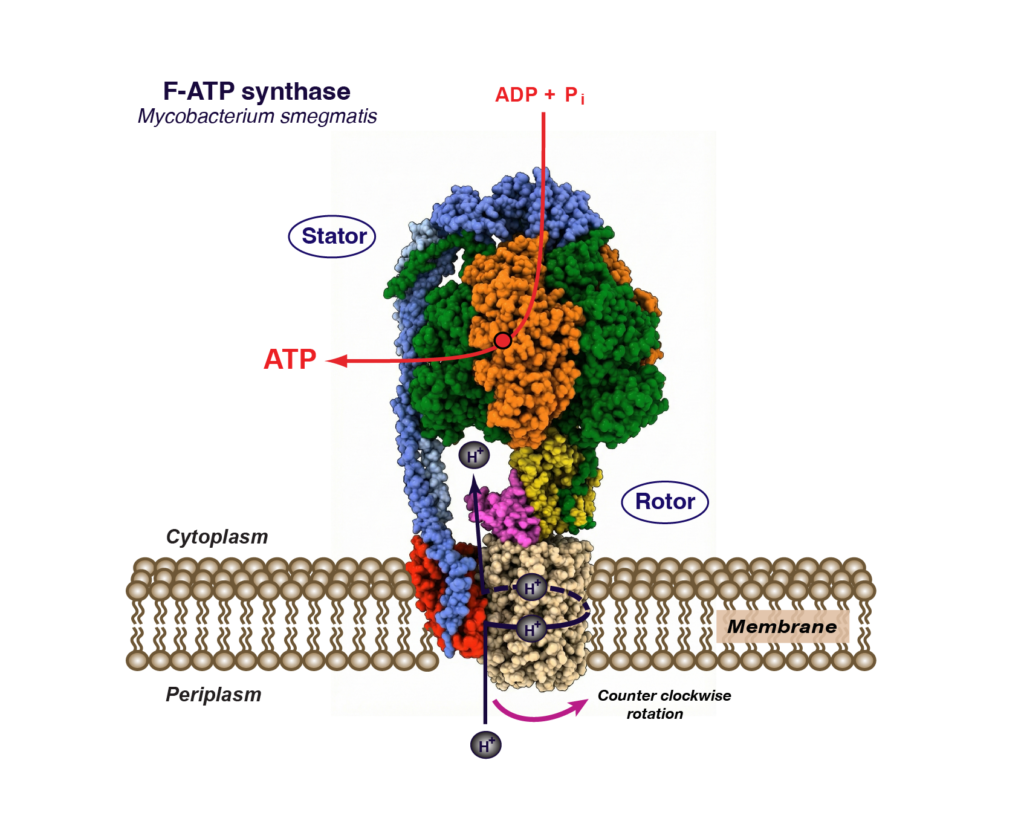
Atomic structure of Mycobacterial
F-ATP synthase rotary nano-motor
Credit: Dr. Vladimir Marshansky, NHP, Cambridge, USA
and Prof. Dr. Gerhard Grüber, NTU, Singapore
Rotary mechanism of Mycobacterial
F-ATP synthase rotary nano-motor
Credit: Dr. Vladimir Marshansky, NHP, Cambridge, USA
and Prof. Dr. Gerhard Grüber, NTU, Singapore
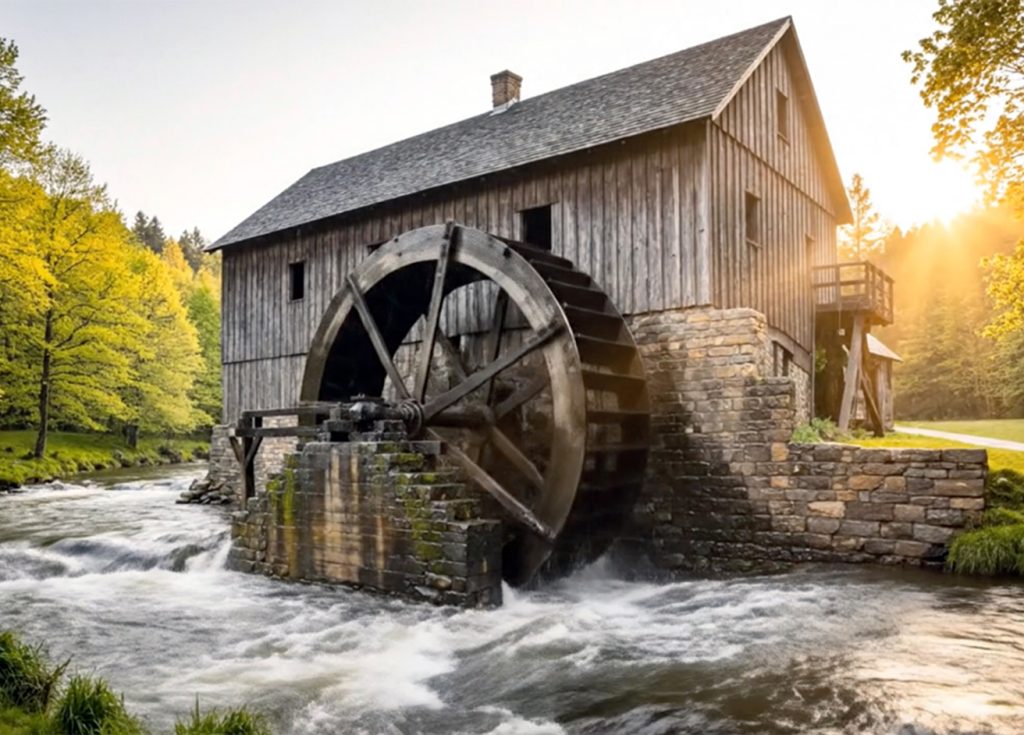
Water mill Rotary Motor
Facts and Function
| Inventor | Homo sapiens |
|---|---|
| Time of Invention | ~ 4 thousand years ago |
| Size of Rotor | Diameter 5-10 meters |
| Speed of Rotation | 10-30 RPM |
| Energy Transformation | The power of water (H20) flow is driving mechanical work |